Beyond the Box Score: What Is WAR in Baseball and Why Does It Matter?
In the modern age of baseball, traditional statistics like Batting Average (BA), Runs Batted In (RBI), and Pitcher Wins (W) are no longer the ultimate measure of a player’s worth. They tell a story, but not the whole story. To truly understand a player’s value, we must turn to the master key of baseball analytics: WAR.
WAR, or Wins Above Replacement, is the defining statistic of 21st-century baseball. It’s the singular number that changes how executives build teams, how awards are decided, and how fans debate greatness.
But what exactly is it, and why should you care?
Part 1: What is WAR? (The Definition)
WAR is an all-encompassing sabermetric statistic designed to summarize a player’s total contributions to their team in one single number.
Unlike traditional stats, which measure what happened (e.g., he got a hit), WAR measures the value of what happened relative to a specific context.
The context is the “Replacement Player.”
Think of a “replacement-level player” as a Triple-A call-up, a benchwarmer, or a widely available free agent, someone you can acquire easily and cheaply. They are fundamentally average-to-below-average Major Leaguers.
WAR calculates how many more wins a specific player contributes to his team than that hypothetical replacement player would have contributed if given the same number of opportunities (at-bats or innings pitched).
Part 2: How is WAR Calculated? (The Formula, Simplified)
The actual calculation for WAR is incredibly complex, differing slightly depending on the source (Fangraphs (fWAR) and Baseball-Reference (bWAR) are the two primary providers).
However, the philosophy behind the formula is simple: Everything Matters.
WAR includes a player’s contributions in five key areas, which are then weighted and adjusted:
- Batting: How well did you hit, accounting for the environment you played in (e.g., hitting a home run in Coors Field is weighted differently than in Petco Park)? This includes factors like on-base percentage (OBP) and slugging (SLG).
- Baserunning: Did you take extra bases? Did you steal efficiently? Did you get caught too often?
- Fielding: How good are you defensively? This is where modern metrics (like Defensive Runs Saved or Outs Above Average) quantify defense, which traditional stats (like Fielding Percentage) miss. A Gold Glove winner has a high defensive component.
- Positional Adjustment: Not all positions are equal. A shortstop (a premium defensive position) gets a “bonus” because it’s harder to find a replacement shortstop than a replacement first baseman (who receives a “penalty”).
- Pitching (for pitchers): This measures a pitcher’s effectiveness based on runs allowed, strikeouts, walks, and (crucially) home runs allowed, often adjusted for defense (using FIP, or Fielding Independent Pitching).
These five factors are consolidated into a single decimal number.
What Do the Numbers Mean?
To put it in perspective for a single season:
- 0.0 to 1.0 WAR: Scabbing or replacement level.
- 1.0 to 2.0 WAR: Role player/Bench player.
- 2.0 to 3.0 WAR: Solid starter (e.g., an average everyday outfielder).
- 3.0 to 4.0 WAR: Good player/Above-average starter.
- 4.0 to 5.0 WAR: All-Star caliber.
- 5.0 to 6.0 WAR: Superstar/Silver Slugger contender.
- 6.0+ WAR: MVP/Cy Young Contender/Hall of Fame track.
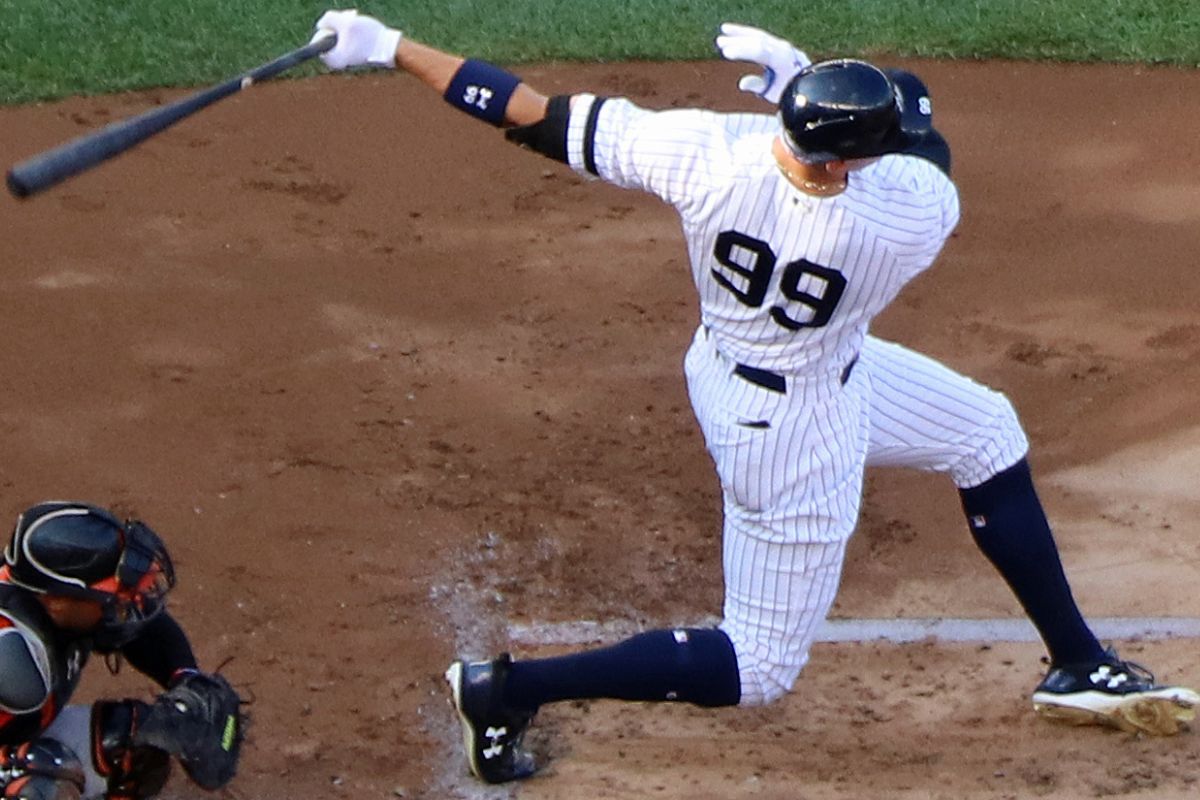
Example: In his 2022 MVP season, Aaron Judge posted a historic 10.6 bWAR. This meant he contributed roughly 10 and a half more wins to the Yankees than a Triple-A call-up would have.
Part 3: Why Does WAR Matter? (The Impact)
WAR isn’t just a nerdy number; it’s the foundation of modern baseball logic.
1. It Levels the Playing Field (Context is Everything)
Traditional stats are easily skewed. A hitter with 100 RBIs might seem elite, but if he plays on a team where the guys hitting in front of him always get on base (increasing his opportunities), that 100 RBIs might overstate his actual talent.
WAR adjusts for:
- Ballpark Factors: It doesn’t penalize a hitter for playing in a pitchers’ park, and it doesn’t inflate a pitcher for playing in a hitters’ park.
- The Era: It compares players to their contemporaries. A high home run total in 2024 (the ‘juiced ball era’) is worth less than the same total in the low-scoring ‘Deadball Era’ of 1910.
2. It’s a Valuation Tool (Show Me the Money)
In the 2026 offseason, when a team offers a player a $300 million contract, they aren’t guessing. General Managers use WAR to project future performance and calculate the “cost per win.” If a player is projected for 4.0 WAR annually and the market rate for 1.0 WAR is $10 million, the team can justify a $40 million annual salary. WAR drives contracts.
3. It Redefines MVP and Awards Races
The standard debate in MVP voting used to be “Should the best player win, or the player on the best team?” WAR has mostly solved this. By isolating a player’s individual contribution removed from their team context, we can finally determine who actually provided the most value to their organization.
4. It settles (and creates) Debates
How do you compare a legendary shortstop like Derek Jeter (high batting average, questionable defense at times, massive leadership value) to a shortstop like Andrelton Simmons (lower average, but perhaps the greatest defensive shortstop of his generation)?
WAR gives us a common currency to compare them. It allows us to compare 1920 Babe Ruth (the pitcher/hitter) to modern Shohei Ohtani (the pitcher/hitter). It’s the closest thing baseball has to a definitive scoreboard.
The Verdict: Why WAR is Required Reading
While WAR is not perfect, no stat can measure leadership, clubhouse presence, or “clutch” ability. It is the single most powerful tool we have for evaluating baseball talent. It forces us to ask why we value certain statistics and provides the necessary context to determine a player’s true worth.
In the age of information, if you want to understand how the modern game is played, evaluated, and won, you must understand Wins Above Replacement.
Image Credit: Wikimedia Commons Jeffrey Hayes