Why “Natural Talent” is a Myth: The Modern Science of Building a GOAT
In the world of professional sports, we love the “chosen one” narrative. We tell stories of LeBron James, Tiger Woods, and Shohei Ohtani as if they were simply born with a different DNA sequence than the rest of us. But as sports science enters a new frontier in 2026, the data is beginning to tell a much more interesting and controversial story.
The “Greatest of All Time” (GOAT) isn’t born; they are engineered. From biometric tracking to neuro-athletic training, the gap between the elite and the “almost-great” is no longer about who works harder. It’s about who uses the most advanced data to hack their own biology.
The Death of the “Eye Test”
For decades, scouts relied on the “eye test.” They looked for a “live arm” in a pitcher or “court vision” in a point guard. Today, those terms are effectively obsolete. In modern baseball, teams no longer care if a swing “looks” pretty; they care about Barrel Rate and Hard-Hit Percentage.
Take a look at the transition in MLB. We’ve moved away from valuing the RBI (Runs Batted In) because it depends too much on a player’s teammates. Instead, we look at WAR (Wins Above Replacement). Why? Because WAR is the ultimate evergreen stat, it levels the playing field across different eras. When you compare a 1920s legend to a 2026 superstar, WAR is the only metric that tells you who actually provided more value to their team.
Neuro-Athletics: The Final Frontier
The biggest shift we’ve seen recently isn’t physical; it’s neurological. In 2026, top-tier athletes are using “brain priming.” Before a game, players in the NFL and NBA are using strobe-light glasses and VR simulations to speed up their neural processing.
This explains why quarterbacks like Patrick Mahomes seem to see the field in “slow motion.” It’s not just a gift; it’s a result of cognitive training that allows his brain to process visual data 15% faster than the average human. When we debate who the GOAT is, we are often just debating whose brain was better optimized for high-speed decision-making.
The “Longevity Revolution”
Perhaps the most evergreen topic in sports is the quest for eternal youth. In the past, an athlete’s prime ended at 30. Today, we are seeing 40-year-olds dominate major championships.
The secret lies in “Bio-individual Recovery.” Using wearable tech that monitors everything from glucose levels to REM sleep cycles, athletes can now predict an injury before it happens. If a player’s “Body Battery” or strain-to-recovery ratio is off, they sit out. While fans often criticize “load management,” the data proves it is the only reason we get to see legends play at an elite level for two decades.
Who is the Ultimate GOAT?
If we take the emotion out of it and look strictly at the numbers—the advanced analytics, the longevity, and the peak performance metrics—the list of the greatest athletes changes:
- The Statistical Freak: Wayne Gretzky (NHL) – His lead in “Points Above Replacement” is so high it may never be touched.
- The Multi-Tool Miracle: Shohei Ohtani (MLB) – By combining elite pitching and elite hitting (evidenced by his record-breaking Barrel Rates), he has broken every traditional “value” model.
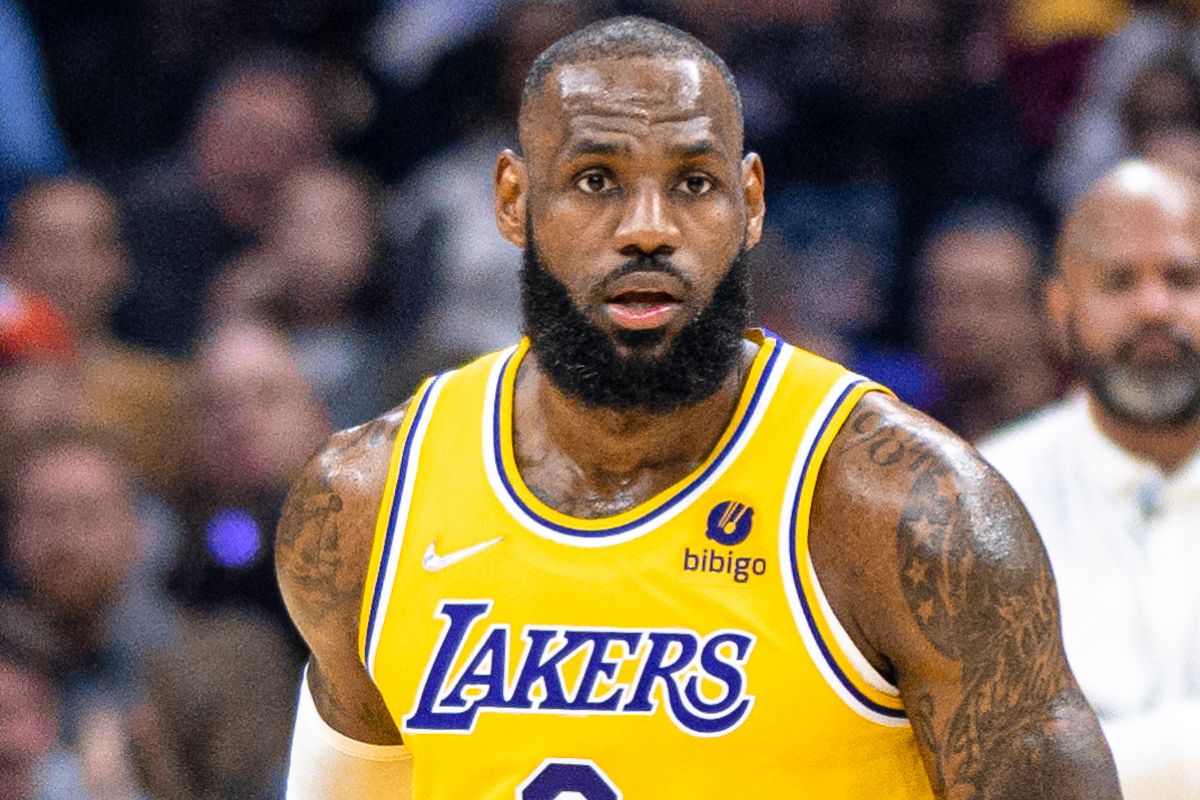
- The Longevity King: LeBron James (NBA) – The first athlete to successfully use $1 million+ per year in bio-hacking to stay in peak physical condition for 20+ years.
The Bottom Line
As fans, we will always argue about heart, grit, and “clutch genes.” But the sports world is moving toward a reality where greatness is measurable, repeatable, and programmable. The next GOAT won’t just be the fastest or the strongest; they will be the one with the best data team in their corner.
Image Credit Wikimedia Commons Erik Drost