
The Making of the Winter Olympics: A Century of Sport and Tradition
The Winter Olympics have grown from a modest gathering of winter sport enthusiasts into one of the world’s most celebrated global sporting events. For more than a century, the Games have showcased athletic excellence, international unity, and unforgettable moments played out on snow and ice. From their humble beginnings in the French Alps to the modern spectacle watched by billions, the history of the Winter Olympics is a story of evolution, resilience, and sporting greatness.
The Birth of the Winter Games
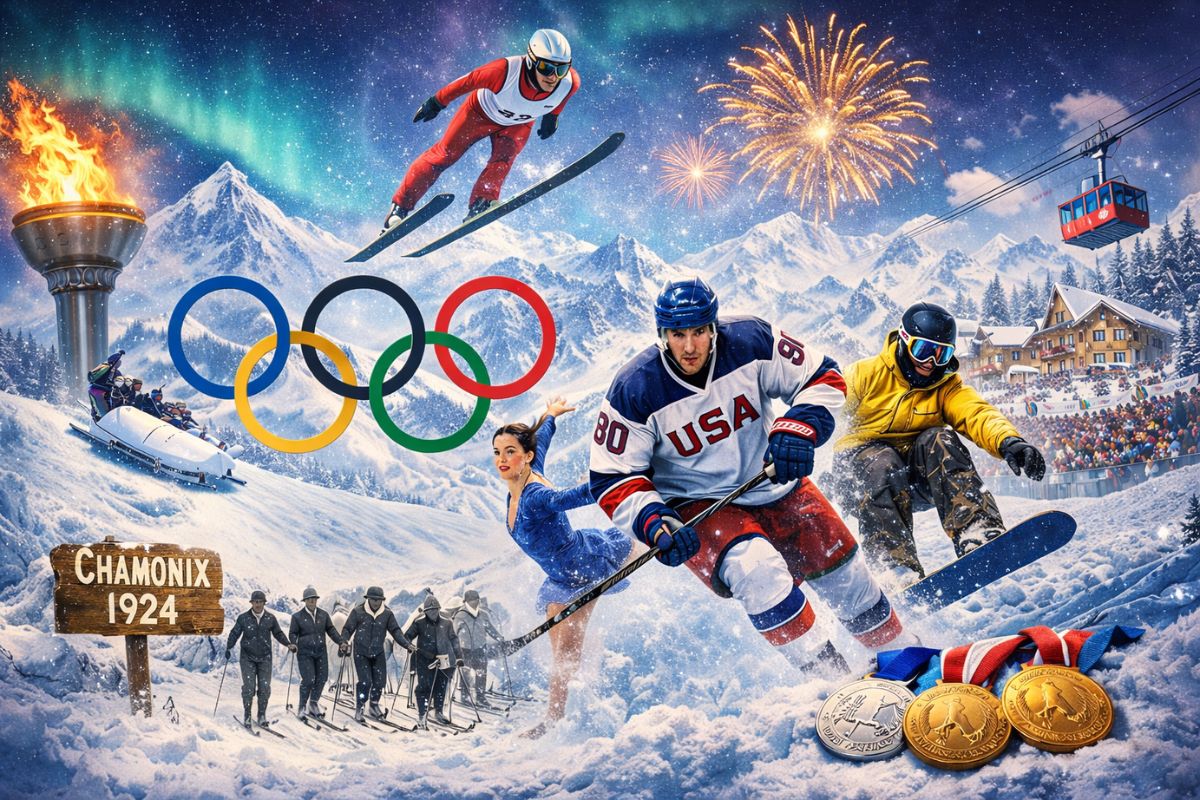
The first Winter Olympics were held in Chamonix, France, in 1924, originally organized as the “International Winter Sports Week.” Featuring just 16 nations and 258 athletes, the early Games included sports such as cross-country skiing, figure skating, speed skating, bobsleigh, and ice hockey. The event proved so successful that the International Olympic Committee (IOC) officially recognized it as the first Winter Olympic Games two years later.
In these early years, the Winter Olympics were far smaller and less commercial than today’s version. Many athletes were amateurs, and the focus was purely on competition and international friendship rather than global broadcasting or sponsorship.
Growth and Expansion
The Winter Olympics steadily grew in both size and popularity through the 1930s and beyond. The Games introduced new sports, including alpine skiing in 1936 (Garmisch-Partenkirchen, Germany), which helped broaden the appeal of the event. However, the outbreak of World War II forced the cancellation of the 1940 and 1944 Games, interrupting the Olympic movement.
When the Winter Olympics returned in 1948 in St. Moritz, Switzerland, they symbolized hope and rebuilding in a world recovering from war. Over the following decades, the Games expanded dramatically, with more countries, athletes, and events joining the program.
The Cold War Era and Global Spotlight
During the 1950s through the 1980s, the Winter Olympics became a stage for Cold War rivalry, particularly between the United States and the Soviet Union. Medal counts carried political weight, and athletes were seen as representatives of national strength.
One of the most iconic moments in Olympic history came during the 1980 Lake Placid Games, when the U.S. men’s hockey team—made up mostly of amateur players—defeated the heavily favored Soviet Union in what became known as the “Miracle on Ice.” The victory remains one of the greatest upsets in sports history and helped cement the Winter Olympics as a must-watch global event.
Professional Athletes and Modern Transformation
By the late 20th century, the Winter Olympics underwent major changes. Professional athletes were increasingly allowed to compete, raising the level of competition and bringing global stars into the spotlight. Television coverage expanded dramatically, turning the Games into a worldwide media spectacle.
In 1992, the Winter and Summer Olympics were held in the same year for the last time. Starting in 1994 (Lillehammer, Norway), the Winter Games shifted to a separate four-year cycle offset from the Summer Olympics, giving both events more global attention.
The modern Winter Olympics have introduced new sports to attract younger audiences, including snowboarding (1998), freestyle skiing, and ski cross, along with newer events such as big air and mixed-gender competitions.
Memorable Moments and Legendary Athletes
Throughout its history, the Winter Olympics have produced unforgettable performances and iconic athletes. Norwegian cross-country skier Bjørn Dæhlie became one of the most decorated Winter Olympians ever, while figure skaters like Sonja Henie and Yuzuru Hanyu captivated audiences with artistry and precision.
Speed skating, alpine skiing, and biathlon have also produced legends, while countries like Norway, Canada, Germany, the United States, and Russia have consistently dominated the medal standings.
Canada, in particular, has built a strong Winter Olympic tradition, highlighted by the 2010 Vancouver Games, where the host nation set a then-record with 14 gold medals, including a historic gold-medal win in men’s hockey on home soil.
Challenges and Controversies
Like all global sporting events, the Winter Olympics have faced challenges. Political boycotts, doping scandals, and debates over hosting costs have all shaped the Games. Concerns about climate change and the availability of reliable winter conditions have also influenced where future Games can be held.
Despite these challenges, the Olympics continue to adapt, emphasizing sustainability, athlete welfare, and global inclusion.
The Winter Olympics Today
Today, the Winter Olympics feature over 90 events across 15 sports, with athletes from more than 90 countries competing. Advances in technology, training, and equipment have pushed performances to new heights, while global broadcasting and digital media have made the Games more accessible than ever.
The Winter Olympics remain a celebration of human endurance, precision, and courage, whether it’s the speed of downhill skiing, the grace of figure skating, or the thrill of snowboarding.
A Legacy on Ice and Snow
From a small alpine gathering in 1924 to a global sporting phenomenon, the Winter Olympics have become a symbol of unity, excellence, and perseverance. Each edition builds on the legacy of the past while inspiring future generations of athletes to chase Olympic glory.
As the world looks ahead to future Winter Games, one thing remains certain: the Olympic flame will continue to burn bright on snow and ice, carrying forward a tradition that has united nations for more than a century.
Image Credit: AI Generated