Think A Hole-In-One Is Rare? Wait Until You See The Odds Of This Shot
If you’ve ever watched a broadcast from the PGA Tour, you’ve probably heard the announcers explode with excitement after a dramatic birdie putt or a towering eagle on a par five.
But for casual fans, golf’s unique scoring system can feel like a secret language. Birdies, eagles, albatrosses, why are they named after birds, and what do they actually mean?
As the 2026 season unfolds and scoring continues to drop thanks to longer drives and elite talent, understanding golf’s scoring system can make watching tournaments far more exciting. Even more fascinating are the incredible odds behind the rarest shots in the game, including one achievement that is far less common than a hole-in-one.
Let’s break it down.
The Basics: Everything Starts With Par
Every hole on a golf course has a number called par, which represents the number of strokes an expert golfer is expected to need to complete the hole.
Most courses include three main types of holes:
- Par 3: Short holes typically played in one shot to the green
- Par 4: Medium-length holes requiring two shots to reach the green
- Par 5: Longer holes where players generally need three shots to reach the green
Your score on a hole is measured relative to par. Finishing under par is the goal, while scores above par mean the hole didn’t go quite as planned.
The Good Scores: When Golfers Beat The Course
Golf’s most exciting moments happen when players finish a hole under par.
Birdie (-1)
A birdie happens when a golfer finishes a hole one stroke under par.
Example:
- Scoring a 3 on a par 4
Birdies are the bread and butter of professional golf. Players near the top of the leaderboard at events like The Masters or the U.S. Open often stack together several birdies during a round.
Eagle (-2)
An eagle occurs when a golfer finishes two strokes under par.
This usually happens on par-5 holes, when a player reaches the green in two shots and sinks the putt.
Eagles can completely change the momentum of a round and are one of the fastest ways for players to climb the leaderboard.
Albatross (-3)
The albatross, sometimes called a double eagle, is one of the rarest feats in sports.
It occurs when a golfer scores three strokes under par on a single hole.
Examples include:
- Scoring 2 on a par 5
- Scoring 1 on a par 4
While birdies and even eagles happen regularly on tour, an albatross is so rare that many professional golfers go their entire careers without recording one.
Hole-In-One (Ace)
A hole-in-one, also known as an ace, happens when the ball goes straight from the tee into the hole with a single shot.
Most aces happen on par-3 holes. In scoring terms, that counts as two strokes under par, technically an eagle.
Hole-in-ones are famous because they’re dramatic and easy to recognize. They produce viral celebrations, crowd roars, and instant highlights.
But surprisingly, they’re not the rarest achievement in golf.
The Bad Scores: When Things Go Wrong
Not every hole goes according to plan.
Here are the most common scores over par:
- Bogey (+1): One stroke over par
- Double Bogey (+2): Two strokes over par
- Triple Bogey (+3): Three strokes over par
Even the world’s best players occasionally find water hazards, bunkers, or thick rough that leads to these higher scores.
The Odds: How Rare Are These Shots?
Golf is famously difficult, and the odds of producing its most exciting moments are staggering.
Here’s how the probabilities compare for an average amateur golfer versus a professional player on the PGA Tour.
Hole-in-One
- Amateur: about 12,500 to 1
- Tour Pro: about 2,500 to 1
Eagle (Par 5)
- Amateur: about 250 to 1
- Tour Pro: about 23 to 1
Albatross
- Amateur: roughly 6,000,000 to 1
- Tour Pro: about 60,000 to 1
To put that into perspective, statistics suggest the average person is more likely to be struck by lightning in their lifetime than to make an albatross.
The Rarest Bird In Golf
Despite the hype surrounding hole-in-ones, the albatross is significantly harder to achieve.
That’s because it usually requires two nearly perfect shots:
- A massive drive on a par 5
- A long fairway wood or iron from 200 yards or more that goes directly into the hole
It’s essentially a miracle shot from the fairway.
At historic tournaments like the The Masters at Augusta National Golf Club, there have been dozens of hole-in-ones over the decades, but only four albatrosses ever recorded.
That rarity is what makes the shot legendary.
The Power Era: Why Eagles Are Increasing
Modern golf has changed dramatically in recent years.
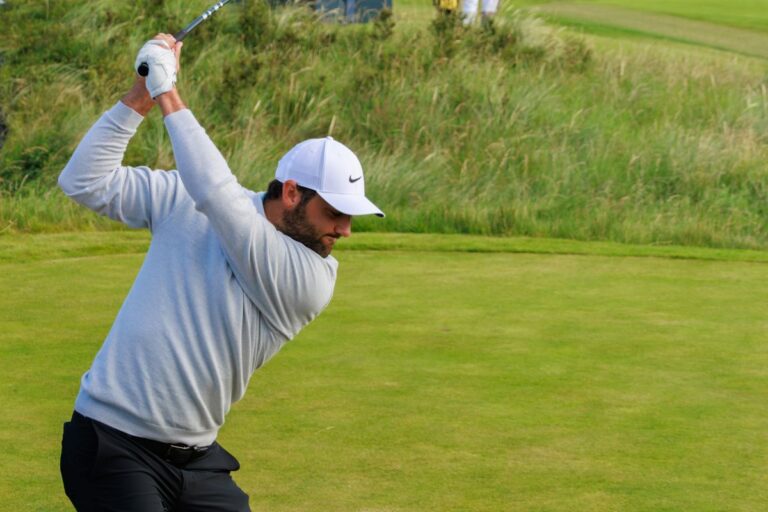
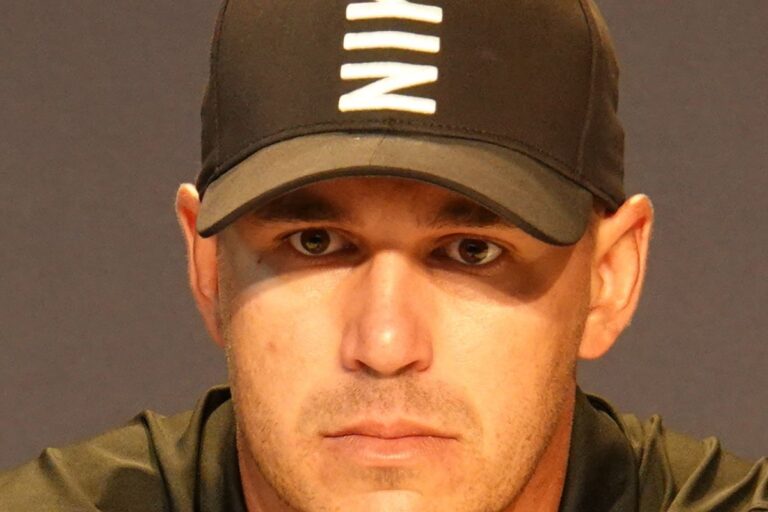
Players like Scottie Scheffler and Keegan Bradley represent the modern power game, longer drives, aggressive play, and advanced analytics guiding strategy.
Because of this, eagles are becoming slightly more common, especially on reachable par-5 holes.
Bradley, for example, has recently averaged roughly one eagle every 40–45 holes, showing just how much the modern game rewards distance and precision.
But even in this new era of power golf, one thing hasn’t changed.
The albatross remains golf’s ultimate rarity, the shot that even the world’s best players almost never see.
And if you ever witness one in person, you’ll be watching a moment that most golfers spend a lifetime chasing.
If you’ve ever watched a PGA Tour broadcast, you’ve heard the announcers get electric over a “Birdie” or lose their minds over an “Eagle.” But for the casual fan or the new player, golf’s avian-themed scoring system can feel like a secret language.
As we move through the 2026 PGA Tour season, the scoring is lower than ever. To help you track the leaderboard at the next Major, here is a breakdown of how golf scoring works and the astronomical odds of hitting the game’s rarest shots.
The Basics: Understanding The “Par”
Every hole on a golf course is assigned a Par, the number of strokes an expert golfer is expected to need to complete that hole. Most holes are Par 3s, Par 4s, or Par 5s. Your score is measured by how many strokes you take relative to that number.
1. The Good Scores (Under Par)
- Birdie (-1): Completing a hole in one stroke less than par (e.g., a 3 on a Par 4).
- Eagle (-2): Completing a hole in two strokes less than par. This usually happens by hitting the green in two shots on a Par 5 and sinking the first putt.
- Albatross (-3): Also known as a Double Eagle. This is the holy grail of golf. It occurs when you score three under par on a single hole (e.g., a 2 on a Par 5).
- Hole-in-One (Ace): Sinking the ball in a single stroke from the tee. On a Par 3, this is an Eagle; on a rare Par 4, it would be an Albatross!
2. The Bad Scores (Over Par)
- Bogey (+1): One stroke over par.
- Double Bogey (+2): Two strokes over par.
- Triple Bogey (+3): Three strokes over par—usually the result of a water hazard or a lost ball!
The Odds: How Hard Is It Really?
Even for the best players in the world, golf is a game of inches and immense luck. Here is how the odds stack up for a PGA Tour Professional versus an Average Amateur.
| Achievement | Odds for Amateurs | Odds for PGA Pros |
| Hole-in-One | 12,500 to 1 | 2,500 to 1 |
| Eagle (on a Par 5) | 250 to 1 | 23 to 1 |
| Albatross | 6,000,000 to 1 | 60,000 to 1 |
Export to Sheets
Did You Know? You are statistically more likely to be struck by lightning (1 in 15,000) in your lifetime than you are to hit an Albatross as an amateur golfer.
The “Rarest Bird”: The Albatross Vs. The Ace
While a Hole-in-One gets all the glory and the viral videos, the Albatross is actually much harder to achieve.
To hit an ace, you only need one perfect shot on a Par 3. To hit an albatross, you typically need two near-impossible shots: a massive drive on a Par 5 followed by a long-range fairway wood or iron (often from 200+ yards away) that disappears into the cup.
In the history of the Masters at Augusta National, there have been over 30 holes-in-one, but only four albatrosses.
2026 Stat Leaders: Who Is Hunting Eagles?
As of March 2026, the PGA Tour’s “Total Eagles” leaderboard is being dominated by aggressive long-hitters. Players like Keegan Bradley and Scottie Scheffler lead the pack, with Bradley averaging an eagle roughly every 43 holes played, a testament to how the modern “power game” has made these rare scores more common than in the past.
Image Credit Wikimedia Commons Theflowerbar