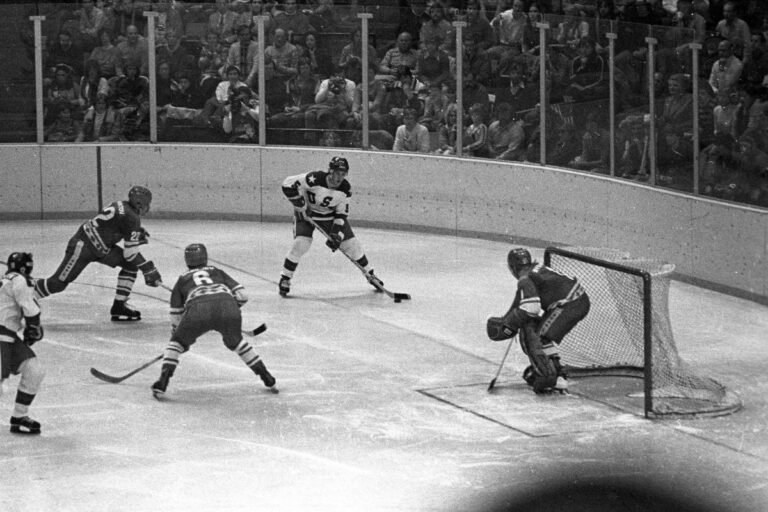

Sports Fans Are Debating Whether Today’s Stars Could Survive the Old-School Era
A Debate That Never Really Dies — But Feels Louder Than Ever Right Now
Every generation of sports fans eventually circles back to the same argument: were athletes better back then, or are they better now?
But recently, that debate has exploded again across social media, sports talk shows, and fan comment sections. The question isn’t just about nostalgia anymore. It’s become something more specific and more heated:
Could today’s biggest stars actually survive the old-school era of sports?
Depending on who you ask, the answers couldn’t be more different.
Some fans are convinced modern athletes would dominate any era. Others say today’s stars benefit from softer rules, advanced training, and a game that’s been reshaped to highlight offense and highlight plays. And neither side seems willing to back down.
What makes it even more interesting is that both sides think they have proof.
The “Old-School Was Tougher” Argument
A large group of fans believes the game used to be far more physical, unforgiving, and mentally brutal.
In basketball, they point to hand-checking, harder fouls, and less protection for scorers. In football, they bring up the era when receivers going across the middle knew they were going to get hit hard—every single time. In hockey, older fans talk about fighting being more accepted and physical intimidation being part of the game itself.
Even baseball gets pulled into the conversation, with fans mentioning tougher travel schedules, more innings for pitchers, and less specialized roles overall.
The core argument is simple:
today’s stars wouldn’t survive the physical punishment of past eras.
They argue that modern athletes are more skilled, yes—but also more protected. Fewer hard fouls. More replay review. Stricter safety rules. Softer landing spots for star players the league wants to protect.
In their eyes, older generations weren’t just playing a different game—they were playing a harder one.
The Counter-Argument: Modern Athletes Would Adjust Instantly
On the other side, fans argue this comparison ignores how much sports have evolved in every possible way.
Modern athletes aren’t just bigger and faster—they’re trained with completely different systems. Strength programs are more advanced. Nutrition is personalized. Recovery is treated as seriously as performance. And year-round development has changed what the human body can handle at the highest level.
Supporters of today’s stars say the old-school argument underestimates adaptability.
Their point is simple:
elite talent doesn’t disappear because the rules change. It adapts.
They argue that if today’s stars were dropped into a more physical era, they wouldn’t automatically fail—they would adjust their game the same way players in every generation have adjusted before them.
They also point out that every era tends to romanticize its own difficulty while downplaying its limitations.
The NBA Version of the Debate Gets the Loudest
Nowhere is this debate louder than in basketball.
Old-school fans often argue that modern scoring is inflated by spacing, three-point shooting, and defensive restrictions. They say it’s easier for stars to put up big numbers now than it was in the 80s or 90s when physical defense was more common and paint scoring came at a cost.
Modern fans respond by pointing to pace, athleticism, and efficiency. They argue that today’s players face more complex defensive schemes, better scouting, and more detailed game planning than ever before.
The clash of styles fuels endless comparisons between eras—players like Michael Jordan, Kobe Bryant, LeBron James, and current superstars are constantly dragged into hypothetical matchups that can never truly be settled.
And that’s part of the reason the debate never ends.
NFL Fans Add Another Layer to the Argument
Football fans bring a different angle entirely.
Older fans often say the modern NFL has become too protective of quarterbacks and receivers. They point to rules limiting hits, changes in tackling techniques, and penalties that heavily favor offense.
Modern fans counter that today’s defensive players are bigger, faster, and more athletic than ever before. They also say the speed of today’s game is significantly higher, with more complex offenses forcing defenders to cover more ground than in past decades.
This creates a split opinion:
- Was old football tougher because of physical punishment?
- Or is modern football tougher because of speed and complexity?
Even here, there’s no agreement.
Why This Debate Never Gets Settled
One reason this argument keeps resurfacing is simple: it’s impossible to prove either side definitively.
You can’t fully recreate past eras with today’s athletes. You can’t remove modern training from current stars and expect a fair comparison. Everything changes—rules, equipment, coaching, travel, and even how athletes recover between games.
That uncertainty is what keeps the conversation alive.
Fans aren’t just debating athletes. They’re debating what “greatness” actually means.
Is greatness surviving punishment?
Is it maximizing efficiency?
Is it adapting to any system?
Everyone defines it differently.
The Truth Most Fans End Up Landing On
If there’s one consistent pattern in all of this, it’s that every generation believes their era was the hardest.
Old-school fans feel the game was more physical. Modern fans feel the game is more skilled. And both are partially right depending on how you define “difficulty.”
The reality is that sports didn’t get easier or harder overall—they just changed shape.
Players today face different challenges than players decades ago. Different rules. Different expectations. Different pressures.
But the standard at the top has never gone away.
Final Thought
This debate isn’t going anywhere because it’s not really about stats, highlights, or even eras.
It’s about identity.
Fans use it to define what they value most in sports—toughness, skill, dominance, or adaptability.
And as long as new stars keep rising and old legends keep being remembered, one question will keep coming back again and again:
Was it harder then… or just different?